
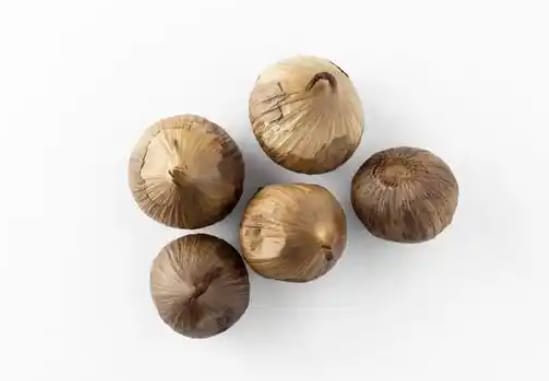
Black garlic offers several key health benefits. First, regarding its antioxidant and anti-aging properties: the fermentation process produces unique sulfur-containing compounds capable of eliminating harmful free radicals from the body. Free radicals act like troublemakers that damage cells and accelerate aging; sulfur-containing compounds neutralize them, helping cells maintain their vitality—a benefit particularly significant for delaying the aging process in middle-aged and older adults. Regarding blood sugar regulation, black garlic can influence insulin secretion, though results vary depending on an individual’s metabolism. Some patients with “three highs” (high blood pressure, high blood sugar, and high blood lipids) experience good blood sugar control, while others see little change; thus, its blood sugar-regulating effects must be evaluated in the context of individual metabolic rates. As for its antimicrobial properties, while studies suggest it has germ-killing effects, clinical evidence remains limited. Beyond these benefits, it is also important to understand the contraindications and precautions associated with black garlic.

Individuals with digestive disorders should strictly limit their intake. Because black garlic can be irritating, consuming too much may aggravate the gastrointestinal mucosa and worsen existing conditions; for instance, a patient with a gastric ulcer was hospitalized for gastric bleeding after consuming a large amount. Additionally, it may interact with certain medications—such as anticoagulants—potentially compromising drug efficacy and increasing the risk of bleeding. Those with a predisposition to allergies should start with a small amount to check for adverse reactions. Having covered these precautions, let us now discuss how to consume it scientifically.
Healthy individuals can consume two or three cloves daily, while those with “three highs” should limit intake to one or two cloves; however, individuals recovering from surgery—whose bodies are in a weakened state—should avoid it initially. Timing matters as well: those with healthy digestive systems may consume it before meals for better nutrient absorption, whereas those with sensitive stomachs should eat it after meals to minimize gastrointestinal irritation. Regarding food pairings, consuming it with whole grains—such as oats or brown rice—is recommended; the dietary fiber in whole grains complements black garlic, leading to a more balanced nutritional intake. While scientific consumption is important, a personalized assessment is necessary to determine the most appropriate intake.
A personalized assessment begins with a complete blood count (CBC), focusing on indicators such as white blood cell count, blood sugar, and blood lipid levels. White blood cell counts reflect immune system status, while blood sugar and lipid levels are relevant to the “three highs.” Gastrointestinal function testing is also crucial, as individuals with digestive issues need to exercise greater caution when consuming black garlic. We establish health profiles for community members to track physical reactions after consumption and adjust plans accordingly. Having covered the personalized assessment, I would like to offer a brief summary.
While black garlic has beneficial properties, it is not suitable for everyone. Dietary interventions should align with your specific health data. Please do not follow trends blindly; instead, make choices based on your own physical condition. I hope everyone maintains good health through a sensible diet.